Skip to content

Speaking & Lectures

Voices that travel from lecture hall to policy table.

From inaugural lectures and international collaborations to seminars for proprietors building new postgraduate systems: speaking work that translates rigorous science into action.

62nd Inaugural Lecture · Now online

Food as Medicine,
Food as Poison.

Navigating the double-edged plate.

Date

June 4, 2026

Venue

Babcock University

Recorded live · Babcock University Television

Where the work shows up

Academic conferences·Industry conferences·Public lectures & convocations·Panel discussions·Workshops & training·Policy & government forums·Webinars & podcasts·

In his 62nd Inaugural Lecture, “Food as Medicine, Food as Poison: Navigating the Double-Edged Plate,” Professor Olutayo Sunday Shokunbi offers a compelling and timely interrogation of what truly sits on the Nigerian plate. Drawing on more than two decades of research across Nigeria and South Africa, he advances a bold thesis: Nigeria already possesses, within its indigenous food systems, the complete nutritional and pharmacological toolkit needed to address its burden of malnutrition and non-communicable diseases. What is missing is not science, but collective action.

The lecture unfolds in three interlocking sections. “Food as Medicine” presents original mineral composition data for over 141 commonly consumed Nigerian foods and reveals the sobering reality that the average Nigerian adult consumes less than half the daily calcium required, yet nearly double the recommended sodium. “Food as Poison” exposes the other edge of the plate, examining heavy metals in staples, microplastics in bottled water and table salt, calcium-carbide ripening and pesticide residues, then offering practical, household-level mitigation strategies. “Food as Pharmacy” showcases the bioactive promise of Nigerian plant biodiversity, including a patented complementary food (GROWSTAR) for malnourished children, the anti-obesity activity of Phragmanthera incana, the anti-ulcer potency of Phyllanthus amarus, the lactogenic and uterine-cleansing properties of Pentadiplandra brazzeana, and the anti-diabetic effects of the Doum palm fruit.

Weaving Yoruba proverbs, scripture, clinical evidence and policy prescriptions into a single coherent narrative, the lecture moves beyond academic exposition to issue a clarion call to governments, industry, scientists and households. For anyone concerned with public health, food safety, indigenous knowledge or Africa’s nutritional future, this is essential listening.

International collaboration

Research Grant
Loma Linda University.

2022 – 2025

International collaboration evaluating whether a low-carbohydrate, high-fat, conophor-nut-based ketogenic diet produces weight loss and improves cardiometabolic health.

The grant funded a clinical trial in which formulated menus were provided to participants for approximately six months, with biological tissues collected throughout the study for assays establishing health benefits.

This was a landmark international collaboration that has produced revealing results about the role of indigenous, plant-based ketogenic formulations in cardiometabolic care.

Keynote topics

Six themes Prof. Shokunbi is regularly invited to speak on.

  • 01

    Food as Medicine, Food as Poison

    ForPolicy forums, scientific congresses, university convocations

  • 02

    Indigenous African Foods in the Prevention of Non-Communicable Disease

    ForAcademic and clinical audiences across nutrition and public health

  • 03

    Microplastics & Emerging Contaminants in the African Food Chain

    ForRegulators, environmental health agencies, food industry

  • 04

    Maternal & Child Nutrition in Resource-Constrained Settings

    ForPublic health and development practitioners

  • 05

    Designing Postgraduate Programmes that Build Real Research Leaders

    ForUniversity governing boards, proprietors, policy bodies

  • 06

    From Plant to Patient: Building Functional Foods from African Biodiversity

    ForIndustry partners, food scientists, R&D leaders

Media kit

Everything an organiser needs to introduce, promote and host.

Copy the bios straight into your programme, download a high-resolution headshot, and check the technical requirements below. For anything else, the office responds within 48 hours.

Short bio · for introductions

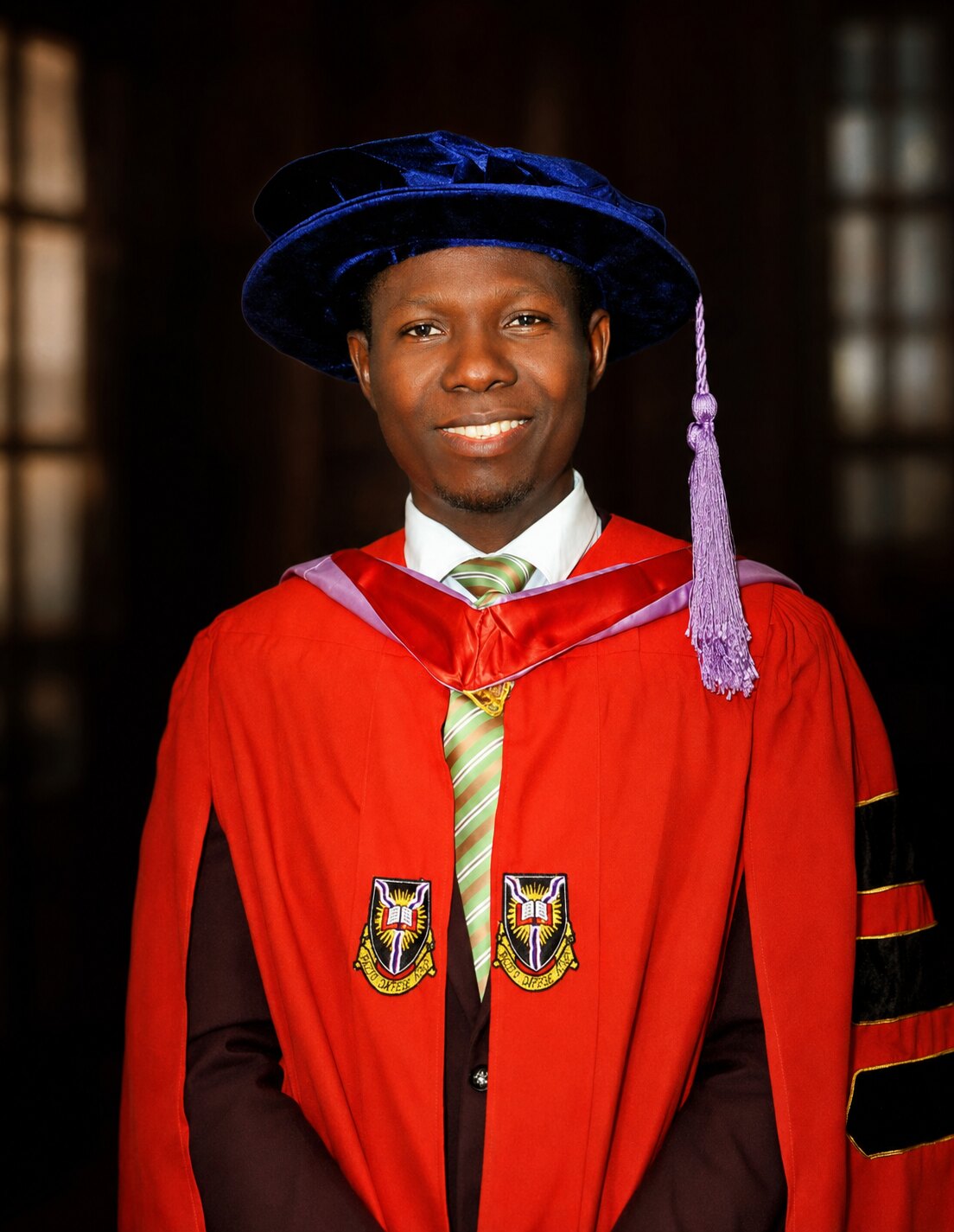
Prof. Olutayo S. Shokunbi is a Professor of Nutritional Biochemistry & Toxicology at Babcock University, Nigeria, with more than two decades of research across Nigeria and South Africa. His work integrates nutrition and toxicology, surfacing both the benefits and the hidden risks on the African plate, from mineral surveillance and functional foods to microplastics and food safety.

Full biography · for programmes & websites

Olutayo S. Shokunbi is a Professor of Nutritional Biochemistry and Toxicology with more than two decades of research and academic experience in nutritional science across Nigeria and South Africa. His research focuses on the surveillance of essential minerals, toxicants, and emerging contaminants in commonly consumed foods and underutilised legumes; complementary food formulation; dietary intake assessment in adolescents and adults; maternal and child nutrition; and food safety.

His scholarly work also addresses the safety and optimisation of expressed breast milk, hypertension in adolescents, nutrient composition of foods, and the biochemical effects of plant bioactive compounds on liver, kidney, cardiovascular and overall health. More recently, his research has expanded to include microplastics and other emerging contaminants in foods, beverages and environmental matrices. He currently leads multidisciplinary research on the development and evaluation of functional foods for the management of diabetes, obesity, lactation challenges and related metabolic conditions.

He has strong technical expertise in graphite-furnace atomic absorption spectrophotometry, flame AAS, and flame photometry. He has authored 40 local and international peer-reviewed publications, including 18 in Scopus-indexed journals, and has provided academic leadership through the coordination of postgraduate programmes. He served as Deputy Provost of the Babcock University College of Postgraduate Studies from August 2021, later as Acting Provost, and subsequently as Provost until February 2026, and as Coordinator of the Doctoral Academy of Nigeria.

What distinguishes Professor Shokunbi's approach is his integration of nutrition and toxicology: a dual lens that gives a more holistic understanding of modern dietary challenges. His research is especially relevant to developing regions, where food quality, economic factors, environmental exposure and health outcomes are tightly interconnected. Driven by a commitment to impact, he advances science that informs policy, improves food safety and promotes healthier communities.
Technical requirements

  • Lapel or handheld microphone; podium or lavalier as the room allows.
  • HDMI input with 16:9 projection; presenter able to advance own slides.
  • Slides supplied in advance as PDF and PowerPoint on request.
  • A confidence monitor is welcome for longer keynotes but not required.

Booking & invitations

Invite Prof. Shokunbi to your event.

Prof. Shokunbi speaks at academic congresses, convocations, policy forums, industry events and on broadcast media. Share your event details and the office will respond within 48 hours.